Masai Mara or Amboseli? It is one of the most common questions for travellers planning a first Kenya safari. Both are iconic, both deliver excellent wildlife experiences, and both can anchor an unforgettable itinerary. But they feel very different on the ground.
If you have enough time, the best answer may be to combine them. If you must choose one, the decision should come down to wildlife priorities, scenery, travel time, season and the kind of safari atmosphere you want.
Explore the full guides for Masai Mara National Reserve and Amboseli National Park while you compare.
Quick comparison: Masai Mara vs Amboseli
Masai Mara is the stronger choice if your priorities are big cats, open savannah, migration-season possibilities and longer game-viewing days in a large wildlife ecosystem.
Amboseli is the stronger choice if your priorities are elephants, Mount Kilimanjaro scenery, a more compact game-viewing area and an easy connection with Tsavo or the Kenya coast.
Both can work for photographers, couples and families. The difference is the story you want your safari to tell.
Wildlife: big cats versus elephant country
The Masai Mara is internationally known for predator viewing. Lions, cheetahs and leopards are important attractions, alongside elephant, buffalo, giraffe, zebra, antelope and many other species. During parts of the year, migratory wildebeest and zebra can add extraordinary density to the ecosystem.
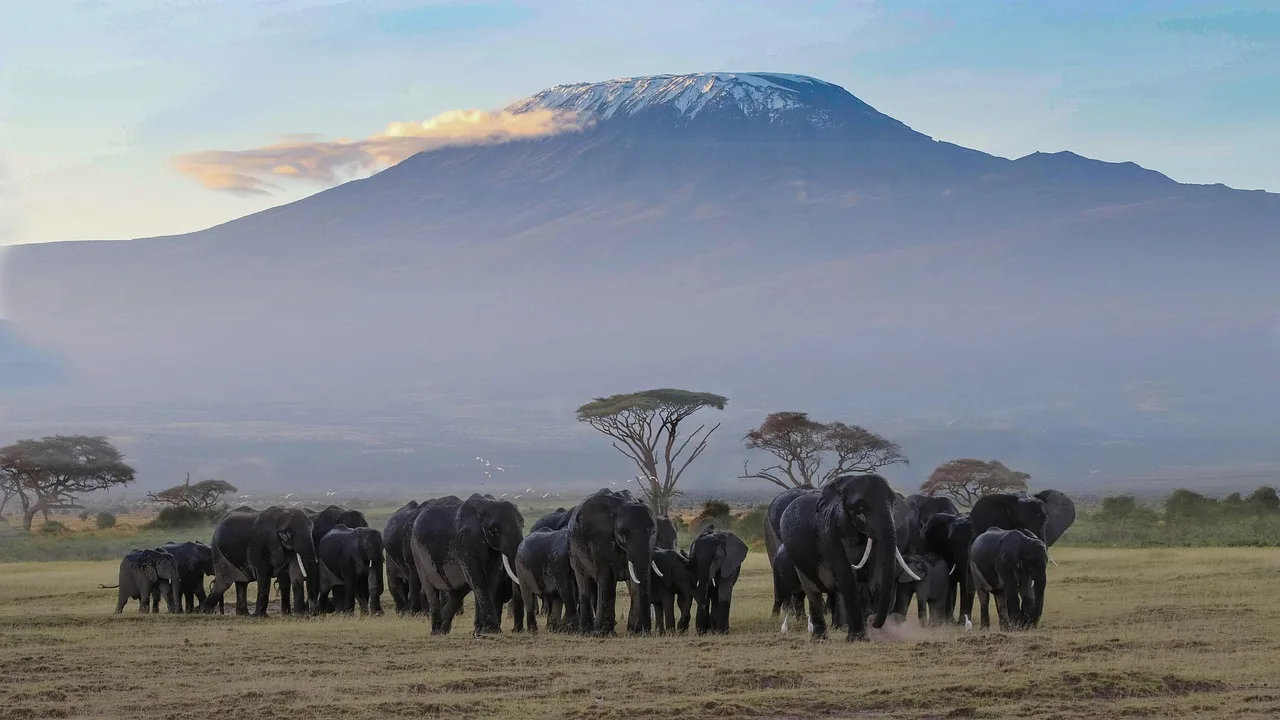
Amboseli is defined by elephants. Large family groups are often seen moving between open plains and permanent wetland areas. Buffalo, zebra, wildebeest, giraffe, hippo, gazelle and predators are also present, but the park’s identity is unmistakably elephant-focused.
If your dream photograph is a lion on an endless plain, the Mara may win. If it is an elephant herd with Kilimanjaro rising behind it, Amboseli is hard to beat.
Scenery: endless plains or Kilimanjaro views
The Mara offers rolling grasslands, river systems, acacia-dotted plains and very big horizons. It feels expansive and cinematic.
Amboseli is more visually contrasted. Dusty pale plains sit beside green swamps, and on clear days Mount Kilimanjaro dominates the southern skyline. The mountain is across the border in Tanzania, but some of its most famous safari views are photographed from Kenya.
The official Kenya Wildlife Service Amboseli page provides current park information and visitor guidance.
Which is better for the Great Migration?
Choose the Masai Mara if the migration is central to your trip. The Mara forms part of the wider Serengeti-Mara ecosystem, and large migratory herds may enter Kenya during the dry season depending on rainfall and grazing conditions.
Do not plan around the idea that a river crossing will happen at a fixed time. Wildlife movement is unpredictable. A better strategy is to spend several nights in the area and let the guide respond to current conditions.
Which is better for photographers?
Both are superb, but for different reasons.
The Mara offers predators, plains, dramatic skies and the possibility of action around migration season. Amboseli offers elephant behaviour, dust, wetlands, reflections and the Kilimanjaro backdrop.
Serious photographers often benefit from a private vehicle, because it gives more control over positioning and how long to remain at a sighting. Browse our photographic safaris if that is your priority.
Which is better for a family safari?
Amboseli can be especially convenient for families because the park is relatively compact and rewarding game viewing can happen without spending every hour in the vehicle. A lodge with a pool and a slower midday break can work very well.
The Mara can also be excellent for families, particularly older children who are excited by longer game drives and predator sightings. The key is selecting the right camp location and avoiding an itinerary that moves accommodation every night.
For practical family planning, read Kenya Family Safari: Travelling With Children.
How many nights do you need?
For Amboseli, two or three nights can work well in a broader Kenya circuit. It gives time for multiple game drives without making the trip feel repetitive.
For the Masai Mara, three nights is a strong starting point, and four can be worthwhile during migration season, for photography, or if you are staying in a conservancy and want a mix of reserve and conservancy experiences.
These are planning guidelines rather than fixed rules. Flight times, road transfers and lodge locations matter just as much as the number of nights.
Road safari or fly-in safari?
Amboseli is commonly included in a road safari from Nairobi and links naturally with Tsavo West National Park and Tsavo East National Park.
The Mara can be reached by road, but scheduled light-aircraft flights are popular because they save time on longer itineraries. Our fly-in safaris are useful if you want to spend less time transferring between parks.
Can you combine Masai Mara and Amboseli?
Yes, and this is one of Kenya’s classic combinations. A typical route may start in Nairobi, continue to Amboseli, then use a flight or road connection toward the Mara depending on time and budget.
For a longer trip, you can add Lake Nakuru, Lake Naivasha or a beach extension. The best order depends on the flight schedule, hotel availability and your international arrival and departure times.
The Kenya Tourism Board’s official Magical Kenya website is another useful source for national destination inspiration.
Which one should you choose?
Choose Masai Mara if:
- Big cats are your highest priority.
- You want migration-season possibilities.
- You enjoy long game drives across open grasslands.
- You can give the destination at least three nights.
Choose Amboseli if:
- Elephants are your highest priority.
- Kilimanjaro scenery matters to you.
- You want a compact park that combines well with Tsavo.
- You are planning a safari-and-beach route toward the coast.
Choose both if you want two very different versions of Kenya in one trip.
You can browse all Kenya safari packages, or tell us your dates and priorities through Get a Free Quote and we can design the route around you.